
You may have seen this word in a text, a TikTok comment, or a friend’s chat. Someone writes, “Wallahi, I did not know.” What do they mean? The wallahi meaning is simple. It is an Arabic word that means “I swear by God.” People say it to show they are telling the truth.
But there is more to it. The word comes from Islam and carries real weight. Today, many young people also use it as casual slang online. This guide explains the meaning, the origin, how to say it, and how to use it with respect. It is easy once you see the full picture. You will also find examples, a table, and answers to common questions.
Wallahi means “I swear by God” in Arabic. It is an oath. A person says it to prove they are honest. In Islam, it is a serious promise made in God’s name. Online, many people use it more lightly, as a way to say “for real” or “I mean it.” The meaning depends on who says it, where, and why. Both uses are common today.
Wallahi Meaning in Simple Words
Think of wallahi as a strong “I promise.” When someone says it, they put God’s name behind their words. They want you to trust what they say.
The wallahi meaning stays close to this idea in every setting. It adds weight to a statement. Compare these two lines:
- “I did not take it.”
- “Wallahi, I did not take it.”
The second line sounds firmer and more personal. The speaker is asking you to believe them.
Wallahi Meaning in English and Arabic

In Arabic, the word is written واللهِ. Its literal meaning is “by God.” Most people translate it as “I swear by God” or “I swear to God.”
The word has three parts:
- Wa means “by” in an oath.
- Allah means “God.”
- The final -i sound comes from Arabic grammar.
Allah is simply the Arabic word for God. Arabic-speaking Christians and Jews use it too. The wallahi meaning in Arabic and English is the same idea: a promise made in God’s name. English has no perfect match, but “I swear to God” comes close.
Wallahi Origin and Word Roots
Swearing by God’s name is an old habit in Arabic-speaking cultures. The pattern “wa plus a noun” is a normal oath form in classical Arabic. Speakers can use it with God’s name or with other nouns.
As Muslim communities grew in many regions, the word traveled with them. Today, the internet carries it even further. Some young speakers in places like the UK and France use the short form, wallah, in daily talk.
How to Say Wallahi (Pronunciation)
Say it as wah-LAH-hee. Put the stress on the middle part. The “h” is soft, like a gentle breath.
Break it into three beats: wah, LAH, hee. In Arabic, the double “l” is held a little longer. That gives the word its rolling sound.
Many people shorten it to “wallah,” said wah-LAH. Both versions are common. If you want to get it just right, listen to a native Arabic speaker say it.
Is Wallahi Religious or Slang?

Wallahi is both. At its root, it is a religious oath. In Islam, an oath made in God’s name is serious. The Islamic meaning asks believers to speak the truth and avoid false oaths. It also encourages them not to swear too often.
If someone breaks an oath on purpose, scholars teach that they must make up for it. This is called kaffarah. The details differ by school of thought, so a local imam is the best guide.
In daily life, though, many people say wallahi fast and lightly, like “for real.” Words change as people use them. That is why the religious meaning and the slang meaning now live side by side.
Part of Speech and Grammar
In English, wallahi acts like an interjection. It adds emphasis. It can come at the start, in the middle, or at the end of a sentence. It never changes for tense or number.
In Arabic grammar, it is an oath phrase. It joins a small particle, wa, to a noun, Allah.
- “Wallahi, it is true.”
- “It is true, wallahi.”
- “I did not, wallahi, lie to you.”
Set it off with commas. That keeps the sentence clear.
Wallahi Examples in Sentences
Here are real-life examples for different moods.
Serious tone:
- “Wallahi, I will pay you back on Friday.”
- “I am telling the truth, wallahi.”
- “Wallahi, I did not know about the plan.”
Casual tone:
- “Wallahi, this pizza is so good.”
- “Wallahi bro, I forgot my keys again.”
Frustrated tone:
- “Wallahi, I tried everything, and it still failed.”
Now a short chat:
- A: “Did you eat my last slice?”
- B: “No, wallahi! I was not even home.”
- A: “Okay, I believe you.”
Notice how the tone changes from line to line. The same word can sound playful or very serious.
Wallahi Meaning in Texting and Social Media
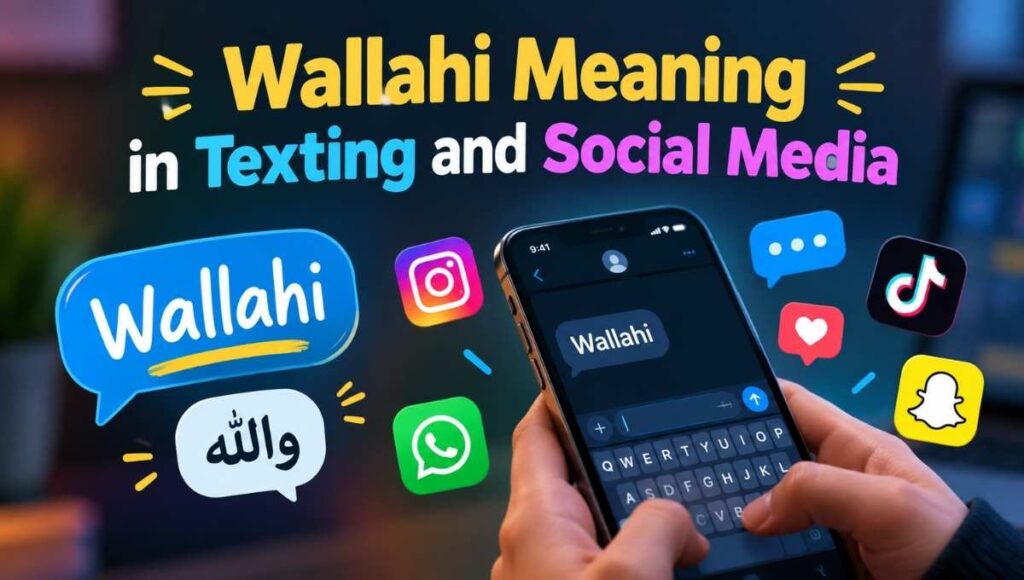
In text messages, the meaning stays the same, but the feel is lighter. People type it fast and skip the pause. On WhatsApp, Instagram DMs, and TikTok comments, it often works like “for real” or “no joke.”
Here are a few examples:
- “wallahi that video made me laugh so hard”
- “wallahi I am not lying, check the link”
- “wallahi this is true” (as a comment)
Spelling is loose online. You will see wallahi, wallah, and walahi. These short forms rarely change the meaning.
Some Muslims feel online use is careless, since the word names God. Others see it as normal slang. Read the room before you type it.
Synonyms and Antonyms
No English word matches wallahi perfectly. Still, several phrases come close. Others work as opposites because they show doubt or play.
| Word or Phrase | Type | Notes |
| I swear | Synonym | Closest everyday match, no direct religious tie |
| I swear to God | Synonym | Very close, with the same God reference |
| I promise | Synonym | Softer, often about a future action |
| Honestly | Synonym | Light and casual |
| For real | Synonym | Slang, very informal |
| Cross my heart | Synonym | Playful, almost childlike |
| Just kidding | Antonym | Cancels the serious tone |
| Maybe | Antonym | Shows doubt |
| I am not sure | Antonym | Admits a lack of certainty |
What is the difference between wallahi and “I swear”? “I swear” can be said with no religious link at all. Wallahi names God directly. For many Muslim speakers, that makes it feel heavier.
Related Phrases and Variations
Wallahi has many cousins. Some are Arabic. Others are mixed with English slang.
- Wallahi billahi: A double oath. “Billahi” also means “by God.” Together, they add extra force.
- Tallahi: Another “by God” form, found in older and formal Arabic.
- Wallahi al azim: “By God the Great.” It sounds formal and strong.
- Wallahi bro or wallahi fam: A friendly way to say, “Bro, I mean it.”
- Wallahi no joke: Adds a clear signal that you are serious.
- Wallahi on God: A blend of Arabic and English slang.
You will also hear other Arabic phrases next to wallahi. Inshallah means “God willing.” Mashallah shows praise or joy. Alhamdulillah means “praise be to God.” Bismillah means “in the name of God.” Each one carries religious meaning, just like wallahi.
Common Mistakes and Misunderstandings
Many people get a few things wrong. Here are the big ones.
- Thinking it is only a joke word. The wallahi meaning is rooted in a real oath, even when used casually.
- Using it to cover a lie. Swearing falsely is a serious matter in Islamic culture.
- Saying it in every sentence. Overuse makes your words weaker, not stronger.
- Believing it always shows anger. Wallahi can show joy, shock, or frustration.
- Using it as mockery. Imitating the word to make fun of Muslims is disrespectful.
A good rule is simple. If you would not make the promise in a serious moment, do not use the word lightly.
When to Say Wallahi and When to Avoid It

Say it when you are truly honest and want to be believed. It fits moments of real sincerity. For example, you might say it when you defend yourself, confirm a fact, or promise something you will do.
Avoid it in these cases:
- When you are joking about something false
- When you are unsure of the facts
- When you are using it only to win an argument
- In formal or work settings, unless the culture around you uses it
Honesty and trust grow over time. A word cannot replace them. If people often catch you swearing about small things, they may stop believing you. That is why many families teach children to use the word with care.
Can Non-Muslims Say Wallahi?
Yes, many do. Friends from different backgrounds often pick up the word. No rule bans it for non-Muslims. The wallahi meaning stays the same for everyone.
Still, the word names God. So it is best to say it only when you mean it. Do not use it to tease or copy someone’s accent.
Cultural differences matter too. In Middle Eastern culture, the word is part of normal life. In Western culture, it may sound new. In some Asian communities, people use it with their own local flavor. If you are unsure, “I swear” works fine. You can also listen first and watch how others use it.
Frequently Asked Questions
Is wallahi a swear word?
No. It is not a curse or a rude word. It is an oath. In English, “swear” has two meanings: to curse and to promise. Wallahi fits the second one.
Why do people say wallahi so often?
Some people use it out of habit. Others use it to be sure they are believed. In some friend groups, it has turned into everyday slang. Its popularity online has also made it more common.
What does wallahi billahi mean?
It means “by God, by God.” The two parts repeat the same oath. People use it when they want to sound extra serious or when someone doubts them.
Is it disrespectful to say wallahi jokingly?
It can be. Many Muslims see the word as a promise made in God’s name. A joke can feel careless to them. Light use among close friends is common, but it is wise to know your audience first.
How should you respond when someone says wallahi?
Keep it simple. You can say, “I believe you,” or “Okay, thanks for telling me.” If the moment is playful, a smile and “for real?” works well. Do not mock the word.
What is the correct way to spell wallahi?
There is no single English spelling. You will see wallahi, wallah, walahi, and wallahy. In Arabic, it is written واللهِ. Pick one spelling and stay consistent in your own writing.
Conclusion
The wallahi meaning is clear once you see its roots. It is an Arabic oath that means “I swear by God.” It started as a serious promise in Islamic culture. Today, it also lives in texts, chats, and social media as a way to say “for real.”
Use it with care. Say it when you mean it, and never use it to hide the truth. Respect the culture behind it, and your words will carry real weight.
