

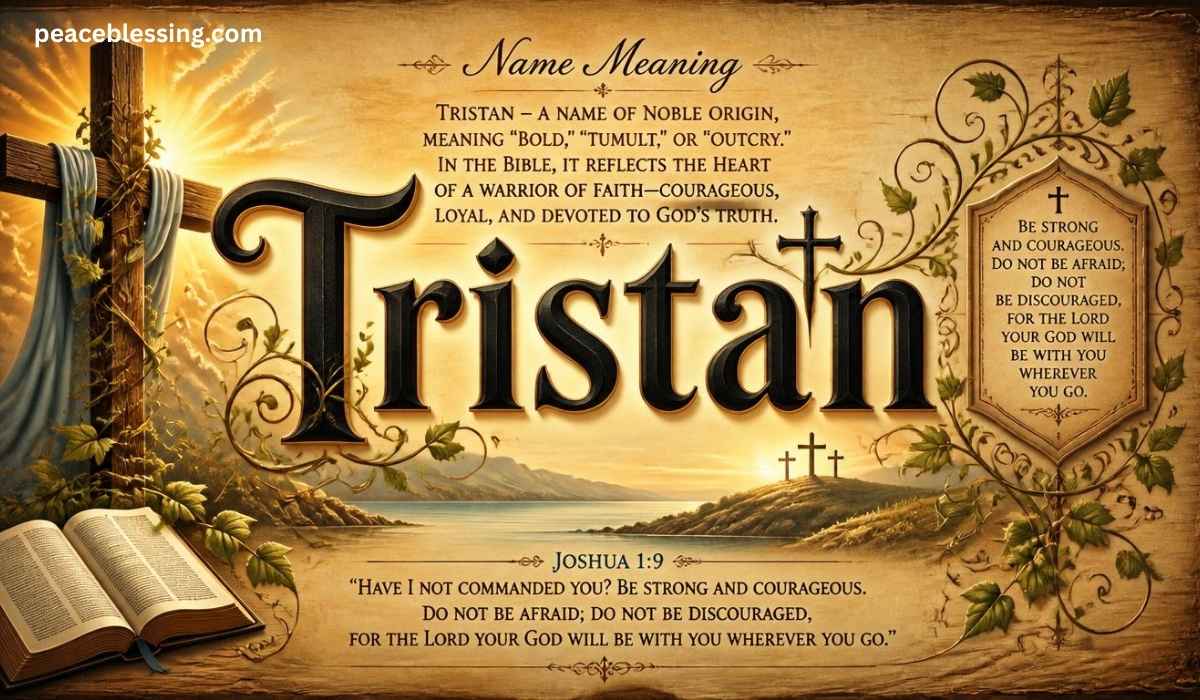
Are you searching for the Tristan Meaning in Bible? You are not alone. Many parents want a name with real depth. Tristan sounds strong and gentle at the same time. But does it come from Scripture? That question brings many people here every year.
This guide gives you the honest answer. We will explain the true Tristan Meaning in Bible, its origin, and its spiritual side. You will learn where the name comes from. You will also see why it still fits Christian families today, even in 2026.
Is Tristan a Biblical Name?
Tristan does not appear as a name written directly in Scripture. It comes from Celtic and Latin traditions rather than Hebrew or Greek biblical texts, so it isn’t considered a traditional biblical name in the historical sense.
Even without direct scriptural roots, many names carry biblical value through meaning rather than mention. Tristan’s link to faith, resilience, and spiritual growth allows it to hold Christian significance despite not being found word-for-word in the Bible.
Is Tristan Mentioned in the Bible?
No verse or passage in the Old or New Testament contains the name Tristan. It simply didn’t exist during the time these books were written, since it developed centuries later through European naming traditions.
This doesn’t diminish its worth for Christian parents. Many meaningful names used today aren’t mentioned in Scripture at all. What matters most is the message behind the name, and Tristan’s message reflects hope, perseverance, and spiritual maturity.
What Does Tristan Actually Mean?
At its core, Tristan is often translated as “sorrowful” or “bold.” These two ideas blend together to create a name that reflects both emotional depth and inner courage, making it layered rather than one-dimensional.
This dual meaning gives Tristan a unique identity. It represents someone who feels deeply yet remains strong through hardship. That balance of sadness and bravery is part of what makes the name so compelling to modern parents.
Read Also: 120+ Blessing Palm Sunday Quotes 2026 | Bible Verses And Prayers
Origin and Etymology of Tristan
Tristan’s origin traces back to the Latin word tristis, meaning sorrow. Over time, it merged with the Celtic name Drustan, which carries connotations of boldness and noise, forming the version we recognize today.
This blend of Latin and Celtic roots explains why Tristan feels emotionally rich. It isn’t just about sadness. It reflects a medieval European naming tradition where strength and vulnerability were often expressed together.
Tristan meaning in Bible
Since Tristan has no direct scriptural origin, its biblical meaning comes from interpretation. Christians often connect its themes of sorrow turning into strength with biblical stories of trials, endurance, and eventual restoration.
This interpretive approach is common for names outside Scripture. By reflecting on the emotional journey the name represents, believers find a spiritual meaning that aligns naturally with Christian values like faith and personal growth.
Does Tristan Have Hebrew or Greek Roots?
Tristan has no connection to Hebrew or Greek, the two primary biblical languages. It originates instead from Latin and Celtic sources, placing it outside the traditional linguistic framework of the Old and New Testaments.
This doesn’t limit its spiritual relevance, though. Names don’t need Hebrew or Greek origins to carry Christian meaning. What gives Tristan its depth is the emotional and symbolic weight behind the word itself.
Understanding the Biblical Meaning of Tristan
To understand Tristan biblically, focus on its themes rather than literal scripture. Sorrow, endurance, and eventual redemption are ideas found throughout the Bible, and Tristan’s meaning mirrors this emotional and spiritual pattern closely.
This is why many Christian parents feel drawn to it. The name captures a journey familiar to believers, moving from pain toward restoration, echoing the way faith often develops through difficult seasons of life.
What Does Tristan Mean Spiritually?
Spiritually, Tristan represents someone who experiences hardship but doesn’t stay broken. It symbolizes emotional depth paired with quiet strength, reflecting a person capable of carrying sorrow while still moving forward with purpose.
This spiritual meaning resonates with many faith traditions. It suggests a soul shaped by challenges yet strengthened through them, aligning with the Christian idea that difficult experiences can lead to deeper spiritual growth.
Tristan Biblical Symbolism and Faith

Tristan’s symbolism centers on transformation. It represents moving from grief to hope, and from hardship to renewal. This mirrors the way Christian teaching often frames suffering as a path toward deeper faith.
Rather than symbolizing weakness, Tristan reflects quiet resilience. Its symbolism suggests someone who holds onto faith during adversity, allowing pain to become a source of character rather than something purely negative or discouraging.
Bible Verses That Reflect Tristan’s Symbolic Meaning
Several biblical passages echo Tristan’s themes without mentioning the name directly. Verses about endurance through trials, comfort during grief, and strength through weakness reflect the emotional arc this name represents for many.
These passages help Christian parents connect the name to Scripture indirectly. They highlight how suffering and faith intertwine, reinforcing Tristan’s symbolic link to perseverance, trust, and eventual restoration found throughout biblical teaching.
Read Also: 170+ Beautiful Happy Birthday Blessings, Bible Verses, Wishes & Inspirational Quotes
Tristan in Legends vs Christian Truth
Historically, Tristan is known through medieval legend, especially the tragic tale of Tristan and Iseult. This story emphasizes sorrow and forbidden love, giving the name literary fame long before any spiritual reinterpretation existed.
Christian interpretation shifts the focus away from legend. Instead of tragic romance, it highlights personal strength, faith, and redemption, reshaping Tristan’s meaning into something uplifting rather than centered on loss or heartbreak.
Is Tristan a Good Christian or Catholic Name?
Yes, many Christian and Catholic families consider Tristan a meaningful choice. Though it isn’t found in Scripture, its themes of endurance and spiritual strength align well with values important to Catholic and Christian households.
Naming traditions in these communities often value symbolism over direct biblical mention. Tristan’s connection to resilience and faith makes it suitable for parents wanting a name with emotional depth and Christian-friendly meaning.
Is Tristan a Christian Name Today?
In modern usage, Tristan is widely embraced by Christian families across different denominations. Its meaning has evolved beyond medieval legend, now representing strength, hope, and spiritual maturity in contemporary Christian naming culture.
This shift shows how names can gain new significance over time. Even without ancient scriptural roots, Tristan fits comfortably into modern Christian identity through its symbolic association with faith and personal growth.
Tristan Name Personality Meaning

People named Tristan are often described as thoughtful, emotionally aware, and quietly strong. Their personality reflects the name’s dual meaning, combining sensitivity with inner courage and a calm, resilient approach to challenges.
This personality profile fits well with the name’s symbolic background. Someone shaped by perseverance and emotional depth often shows steady strength, especially when facing difficult situations that require patience and quiet determination.
Why American Christian Families Choose Tristan?
American Christian families are drawn to Tristan for its balance of meaning and modern appeal. It feels classic yet fresh, and its symbolic ties to faith and strength appeal to parents seeking depth.
The name also stands out without feeling unusual. Its spiritual significance, combined with steady popularity, makes it an easy choice for families wanting something meaningful, timeless, and comfortable within Christian naming traditions.
Conclusion
The Tristan Meaning in Bible shows that a name does not need to appear in Scripture to hold spiritual value. Tristan has roots connected with sorrow, courage, and strength. Its meaning can remind believers that difficult times do not last forever. The Bible often teaches that faith can bring hope, growth, and renewal during hard seasons.
For Christian families, the Tristan Meaning in Bible can offer a message of endurance and restoration. The name reflects the journey from pain to strength and from struggle to hope. Tristan may not be a biblical name, but its symbolism can still connect with important Christian values. It remains a meaningful and thoughtful choice for a child.
FAQs
Is the name Tristan in the Bible?
No, Tristan is not found in the Old or New Testament and has no direct biblical mention.
What is the Tristan meaning in Bible symbolism?
Tristan symbolizes sorrow becoming strength, with themes of faith, endurance, courage, hope, and spiritual growth.
Does Tristan have a Hebrew meaning?
No, Tristan does not have a direct Hebrew meaning because its roots come from Latin and Celtic languages.
Is Tristan mentioned in any Bible verse?
No, Tristan is not mentioned in any Bible verse, though several verses reflect its themes of suffering and endurance.
Is Tristan a religious name?
Tristan is not originally a biblical name, but its meaning carries Christian symbolism connected with faith, perseverance, and restoration.
Is Tristan a good name for a Christian child?
Yes, Tristan can be meaningful for Christian families because its symbolism reflects faith, courage, endurance, and hope through hardship.
