
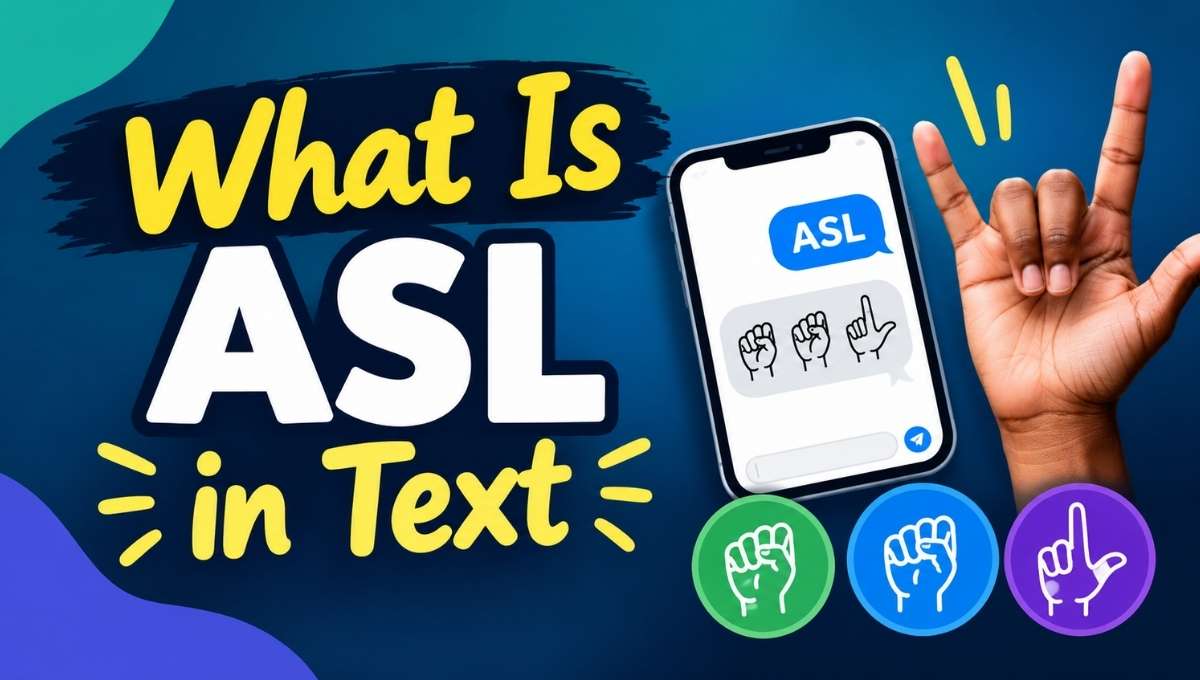
What is ASL in text? It is a short chat question that means age, sex, location. People type it to learn who you are and where you live. The phrase began in early chat rooms, when users had no profiles or photos. A quick “ASL?” helped strangers size each other up fast.
Today the phrase feels old. Social apps already show age and place on a profile. Still, you may get an “ASL?” in a DM, a game lobby, or a joke from a friend. It can also mean American Sign Language, so context matters. This guide explains the meaning, the history, real examples, and easy ways to reply. You will also learn how to protect your own privacy online.
ASL in Text: Quick Meaning
ASL in text means “age, sex, location.” Someone asks it to learn your age, your gender, and where you live. It is a short chat question. It is informal slang. It comes from early internet chat. Today it feels old. You may still see it in DMs from strangers. Always think before you answer. You never have to share private details.
What Does ASL Stand For?
In texting, ASL stands for age, sex, location. Each letter points to one piece of information. A is age. S is sex. L is location. A person types it as a question, like “ASL?” or “What’s your ASL?” The sender wants quick facts. Think of it as a tiny online name tag.
There is another meaning. Some younger users type “asl” to mean “as hell.” For example, “I’m tired asl.” Look at the sentence to tell which meaning fits.
Age, Sex, and Location Explained
Let’s look at each part.
Age is how old you are. People ask it to see if they share your stage of life.
Sex usually means male or female in this question. Many people now say gender instead. Some folks do not fit that simple choice.
Location is where you live. It might be a city, a state, or a country. Some people only give a region.
You can answer one part, all three, or none.
ASL vs. Similar Internet Terms
Many chat terms look alike. Mixing them up is easy. This section clears things up.
ASL vs. A/S/L
These two mean the same thing. A/S/L just adds slashes between the letters. The slashes show that three words sit behind the short form. Some people prefer the slash style. Others skip it to type faster. Both forms ask for age, sex, and location.
ASL vs. American Sign Language
The letters match, but the topics differ. American Sign Language is a full language. Deaf people and many others use it in the United States and parts of Canada. It uses hands, facial expressions, and body movement.
The chat slang has nothing to do with it. Context tells you which one you face. A message about a class or an interpreter points to sign language.
ASL vs. IRL, DM, AFK, and BRB
Here is how ASL compares with other common chat terms:
| Term | Meaning | What it does |
| ASL | Age, sex, location | Asks for basic details |
| IRL | In real life | Talks about the offline world |
| DM | Direct message | Names a private message |
| AFK | Away from keyboard | Says you stepped away |
| BRB | Be right back | Says you will return soon |
Only ASL asks about the person. The others describe a place, an action, or a pause.
Read More: TTYS Meaning in Text: What Does TTYS Mean in a Message?
Where Did ASL Come From?
No one knows who typed it first. Sources like Know Your Meme say the exact origin is unclear. The term likely grew with Internet Relay Chat, or IRC. It then spread through instant messengers in the 1990s. That is how it became a classic piece of old internet slang.
Early Internet Chat Room Culture
Early chat rooms were full of strangers. Nobody had a profile photo or a bio. A chat window showed a screen name and little else. So people needed a fast way to size up each other.
Typing “ASL?” solved that. It took two seconds. It also helped users find people their own age or from their own area. That is why the phrase became a habit in many online chat rooms and on instant messaging tools.
How the Meaning Has Changed
Over time, social sites began to show age and location right on profiles. The question became less needed. It then started to sound old.
The meaning also grew. Some younger users now use “asl” as a short form of “as hell.” A person might write “cold asl” to say it is very cold. So the same three letters can say two very different things today.
ASL in Real-Life Conversations
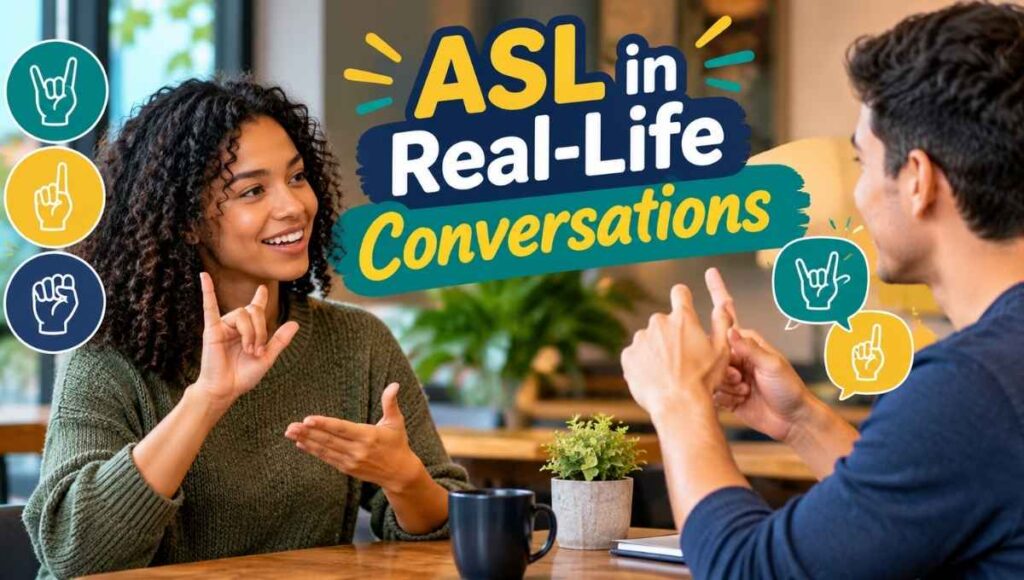
Examples make the meaning clear. Here are three simple chats.
Example 1: Text Message
A new number texts you:
Stranger: Hey, who’s this? ASL?
You: Hi! I think you have the wrong number.
Here the ASL question comes from someone you do not know. A short, calm reply works well. You do not owe them any facts.
Example 2: Instagram DM
A random account sends a message:
User: Hey cutie, asl?
You: I don’t share personal details with people I don’t know.
Instagram profiles already show a lot. So an ASL question there can feel pushy. You can ignore it, block it, or reply with a firm line.
Example 3: Modern Chat
Two friends laugh in a group chat:
Friend 1: Remember when everyone typed ASL in chat rooms?
Friend 2: Haha, yes! Old school internet.
Here ASL is a joke about the past. Nobody wants personal facts. The tone shows the intent.
How ASL Is Used in Different Contexts
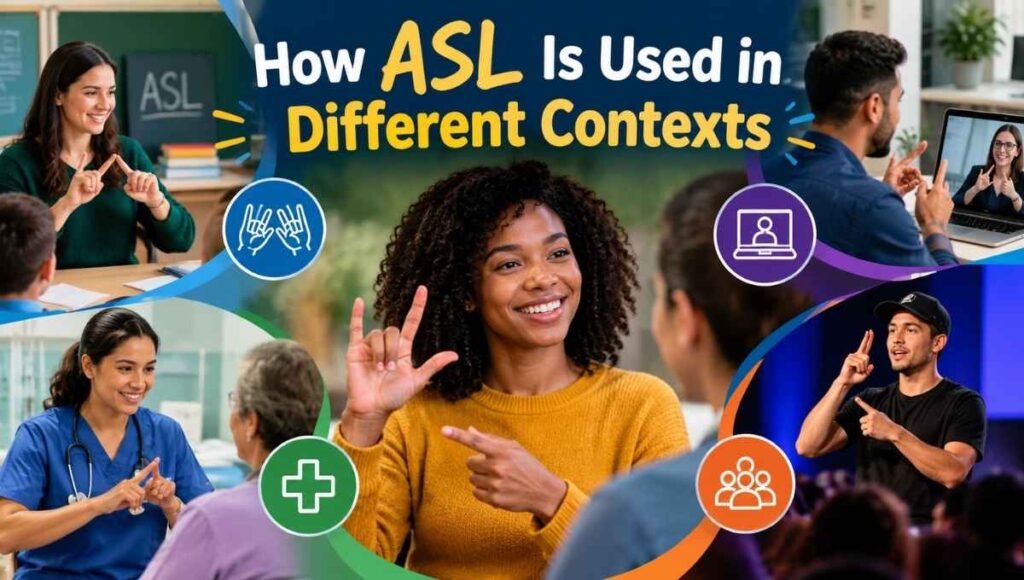
The same question can feel different from place to place. Tone, platform, and the person all matter.
ASL on Social Media
On social media, people can see a lot from a profile. Because of that, ASL shows up less. It still appears in DMs from strangers or in comment threads. On Snapchat or Instagram it can feel like a cold opener. Many users ignore it.
ASL Between Friends
Friends rarely need to ask. They already know each other’s age and town. When they do use it, it is often a joke. A friend might type “ASL?” as a silly way to say hello. The mood is light.
ASL in Dating or Flirting
In dating chats, ASL can be a first step. Someone wants to know if you are close in age and nearby. Some people see it as lazy. Others find it direct. Online flirting works best with a friendlier opener, like a question about hobbies.
ASL in Gaming Chats
Gaming lobbies are full of unknown players. Some ask ASL to find teammates. Others ask it to find someone to chat with. Gamers of all ages play, so be careful. Keep personal details private, especially in open voice or text channels.
ASL at Work
ASL is not a workplace phrase. It is too casual for emails or team chats. Asking a coworker for age, sex, and location would sound strange. If someone at work says ASL, they might mean American Sign Language. Think of a class, a meeting, or an interpreter.
Casual vs. Serious Tone
Tone changes everything. A grin emoji and a joke feel playful. A blunt “asl” from a stranger feels different. Read the whole message. Look at who sent it, where, and why. Then decide how to reply.
Variations and Related Forms of ASL
People write this phrase in several ways. Each form carries a small shift in feel.
ASL?
The plain question mark version is the most common. It is short and direct. It often comes as a first message.
A/S/L?
This form shows each word with slashes. It looks a little more formal. The meaning is the same as the plain version.
ASL Please
Adding “please” makes it sound polite. A person may use it to seem friendly. It can soften the question. Still, you decide whether to answer.
Age and Location
Some users drop the “sex” part. They just ask, “Age and location?” It is a lighter form of the same idea. It feels less personal to many people.
American Sign Language
When ASL appears next to words like Deaf, signing, or school, it means the language. It is a real, rich language with its own grammar. Do not mix it up with the chat slang.
ASL Interpreter, Class, and Community
An ASL interpreter turns spoken words into signs and signs into spoken words. An ASL class teaches people to sign. The ASL community includes Deaf and hard of hearing people, families, friends, and learners. All three terms belong to the language, not the slang.
How to Respond When Someone Uses ASL
You have many choices. Pick the one that matches your mood and your comfort.
Casual Replies
Keep it light and short.
- “Hey! I’ll share a bit after we chat.”
- “Hi there! What brings you here?”
- “Let’s talk first. What are you into?”
These keep the chat friendly. They also keep you in control.
Funny Replies
Humor can turn the moment around.
- “Age: older than the internet. Sex: none of your business. Location: right here.”
- “I’m 99 and live in a cloud.”
- “ASL? I only know the sign language kind.”
Use jokes with people you feel at ease with.
Mature and Confident Replies
A calm tone shows you know your limits.
- “I’d rather get to know you first.”
- “I keep that private. What do you like to do?”
- “Let’s start with a normal hello.”
These replies set a clear tone without drama.
Private or Respectful Replies
When you feel unsure, protect yourself.
- “I don’t share personal info online.”
- “No thanks. Take care.”
- Say nothing, then block or report.
Silence is a fine answer. You do not owe anyone a reply.
Is It Safe to Answer ASL From a Stranger?
Often it is smarter to wait. A stranger can say anything about themselves. You cannot check it. Sharing too much too soon can lead to trouble. Online privacy matters, and so does internet safety. If the sender seems very young or very pushy, stop the chat.
What Personal Information Should You Avoid Sharing?
Keep these private with strangers:
- Your exact age or birth date
- Your home address or school name
- Your full name
- Your phone number
- Photos that show your street or house
- Plans about where you will be
Location sharing is risky. Even small hints add up. A school logo or a street sign in a photo can reveal a lot.
How to Set Boundaries in Online Chats
Boundaries are simple rules you set for yourself.
- Decide what you will never share.
- Say no in a short, calm way.
- Use block and report tools.
- Tell a trusted adult if something feels wrong.
- Do not move to a private app too fast.
Good boundaries protect you. They also help the other person know where you stand.
Common Misunderstandings About ASL
A few myths keep popping up. Let’s clear them.
ASL Does Not Always Mean American Sign Language
The letters have more than one meaning. In a chat, a stranger asking “ASL?” wants age, sex, and location. In a class or a group about signing, ASL means the language. Always check the setting.
ASL Is Not as Common as It Used to Be
It was a big habit in early chat rooms. Today profiles share much of that info already. So the question appears less. You may see it in older forums or random DMs.
You Do Not Have to Answer All Three Questions
Some people feel pressure to give all three answers. You do not. Share one detail, or none. Your comfort comes first.
Sex and Gender Are Not Always Interchangeable
The “S” in ASL says sex. Many people think of gender instead. These two ideas can differ. Because of that, some people feel the question is too narrow. Others skip it. Respect how a person describes themselves.
ASL Is Not Appropriate in Every Situation
Schools, offices, and formal groups are not the place. It can feel nosy or rude. Use warmer ways to meet people in those settings.
The Emotional and Social Meaning of ASL
Behind three letters sits a real human wish. People want to know who is on the other side of the screen.
Why Someone Might Ask ASL
People ask for many reasons. Some are shy and want a quick way to start. Some want to find chat partners near them. A few are only curious. Others copy what they saw online. The reason is not always bad, but you still need caution.
Curiosity, Flirting, and Compatibility
Curiosity is the softest reason. Flirting is another. A person may hope for a match in age or hometown. Compatibility matters in friendships and dating. Asking ASL is a rough, old method to check that.
When the Question Feels Intrusive
Sometimes the question lands badly. It can feel like being sized up. If it makes you uneasy, trust that feeling. You can leave the chat at any time. Feeling uncomfortable is reason enough.
Regional and Cultural Usage of ASL
Chat habits differ around the world. I could not find reliable data on how often each region uses ASL. So here is a general picture only.
ASL in Western Countries
In the United States and other Western countries, the slang spread through early English chat rooms. Many adults remember it as a sign of that time. Younger users often know it as a joke.
ASL in Asian Online Communities
In many Asian online communities, people chat in several languages. English slang may appear in games or international apps. Local terms often take its place in native language chats.
ASL in Middle Eastern Online Communities
Middle Eastern users also meet this slang on global apps and games. Local culture shapes how open people feel about sharing personal details. Many choose more privacy with strangers.
ASL in Global Internet Culture
Online spaces mix people from everywhere. English slang travels far. Even so, meanings shift by community. When in doubt, ask what the person means.
What Are the Modern Alternatives to ASL?
Today there are friendlier ways to start a talk. They feel warmer and safer.
How to Ask Someone’s Age Politely
Try these:
- “Mind if I ask what age group you’re in?”
- “Are you in college or working?”
- “Just curious, are we around the same age?”
Give the person space to skip the question.
How to Ask Where Someone Is From
Keep it broad:
- “Where are you from originally?”
- “Which country are you chatting from?”
- “What’s the weather like where you are?”
You can learn a lot without asking for an exact place.
Better Ways to Introduce Yourself Online
Start with yourself:
- “Hi, I’m Sam. I love music and games.”
- “Hey, I’m new here. What’s fun in this group?”
- “Hello! What do you like to do for fun?”
A warm intro invites a warm reply. It also shows respect.
Is ASL Still Used in Texting Today?
Yes, but not often. Most people now see it as a throwback. It still shows up in random DMs, jokes, and some chat spaces.
Why ASL Can Sound Old-Fashioned
Profiles have changed how we meet online. We see photos, bios, and locations right away. Because of this, a blunt question feels dated. It also feels like a line from the dial-up age.
Who Still Uses ASL in Online Chats?
Some people who grew up with early chat rooms still type it. So do users in older forums. Others use it as a joke or a nostalgia wink. A few use it because they simply do not know better.
ASL in Modern Social Media and Dating Apps
Dating apps and social sites show age and location already. So ASL adds little. Messages there often start with a comment on a photo or a shared interest. Those feel more natural.
FAQs About What ASL Means in Text
What Does ASL Mean in Texting?
In texting, ASL means age, sex, location. It is a quick way to ask for basic details. Some younger users also use “asl” to mean “as hell.”
Is ASL Still Used in Texting?
It is used less than before. Profiles now show most of that info. You may still see it in DMs, older forums, or as a joke.
What Does ASL Mean on Snapchat or Instagram?
On both apps, it usually means age, sex, location. It often comes from a stranger in a DM. You can ignore it, block it, or reply with a polite no.
Is ASL Rude?
It is not always rude, but it can feel pushy. Context matters. A joke between friends feels fine. A blunt ask from a stranger feels different.
How Should I Respond to ASL?
Pick the style you like. You can answer with a joke, a polite deflect, or a simple “I keep that private.” You may also stay silent.
Is It Safe to Share My Age and Location Online?
Be careful with strangers. Keep exact details private. Share only what you feel comfortable with. If something feels off, stop talking and report the account.
Conclusion
So, what is ASL in text? It is an old chat question that means age, sex, and location. It began in early chat rooms and spread through instant messaging. Today it feels dated, and some people use “asl” to mean “as hell.” In a signing class, it means American Sign Language.
You never have to answer. Share only what feels right. Use humor, kindness, or silence to guard your privacy. Remember, your comfort always comes first. Better openers make online chats friendlier and much safer. Now you know the meaning, the history, and smart replies for the next “ASL?” message.
